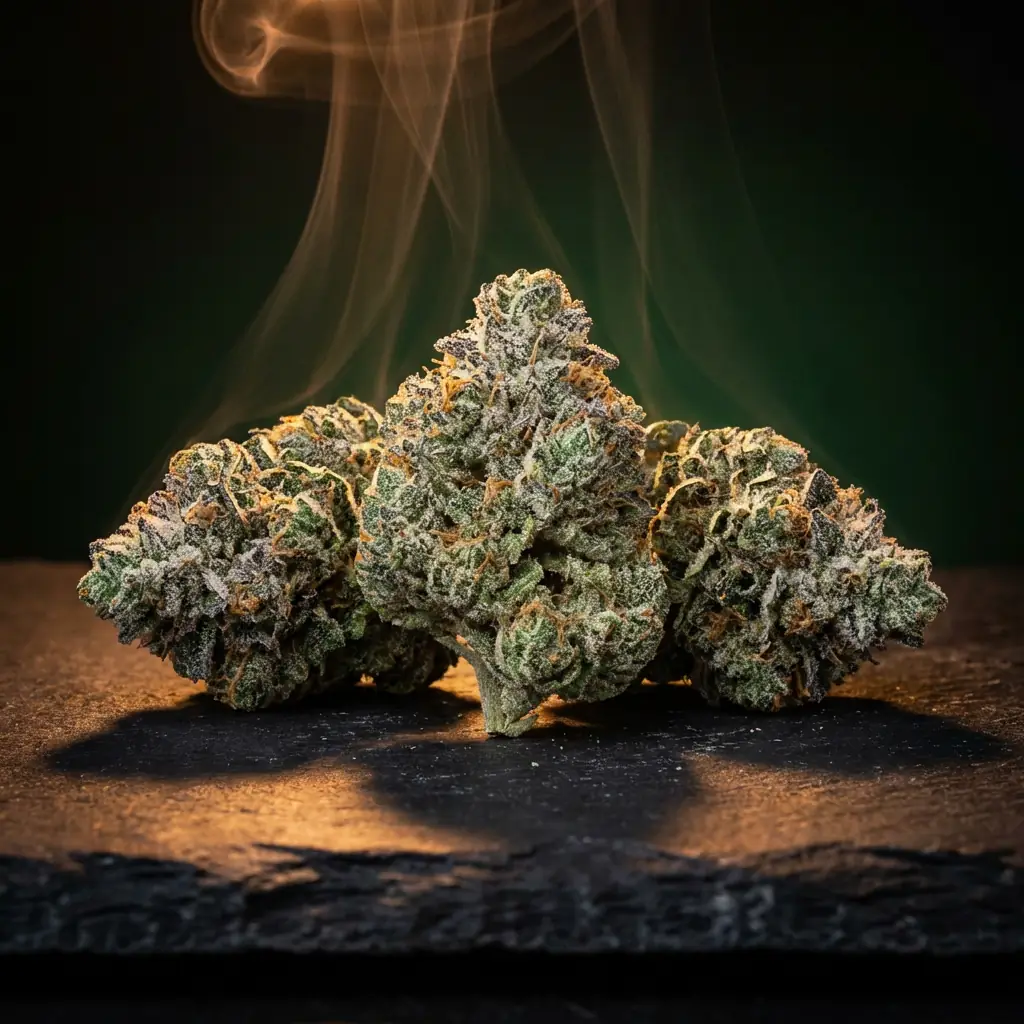
HEMP & CANNABIS LAWS IN OHIO: COMPLETE 2026 GUIDE
Everything you need to know about hemp and cannabis laws in Ohio — recreational marijuana under Issue 2, THCA legality after SB 56, hemp-derived products, possession limits, taxes, home grow rules, and where to buy. Updated for 2026.

Ohio voters told their legislature exactly what they wanted in November 2023. The legislature told them to sit down.
Issue 2 passed with 57% of the vote, making Ohio the 24th state to legalize recreational cannabis. Adults 21 and older could buy, possess, and grow marijuana. The Division of Cannabis Control stood up a regulatory framework. Dispensaries started selling recreational product in August 2024. By early 2026, the market was clearing a billion dollars annually.
Then the Ohio General Assembly did what Ohio General Assemblies do — it rewrote the rules. Senate Bill 56, signed by Governor DeWine in December 2025 and effective March 20, 2026, overhauled the voter-approved law. Public consumption banned. Intoxicating hemp products pulled from every smoke shop and gas station in the state. Source-of-cannabis requirements that didn't exist in the original initiative. The legislature didn't repeal Issue 2, but it reshaped it into something the original drafters barely recognize.
The short version: Recreational and medical marijuana are fully legal. Hemp-derived products that don't get you high — CBD, CBG, seeds, topicals — remain legal and shippable. But intoxicating hemp products like THCA flower, delta-8, and THC gummies got folded into the dispensary system under SB 56. If it produces a high, it goes through a licensed dispensary. Period.
This guide covers everything — Ohio's cannabis history, the Issue 2 framework, what SB 56 changed, possession limits, taxes, home grow rules, what you can buy online, and what Phat Panda ships to Ohio.
Let's get into it.
TL;DR: Ohio Cannabis Laws in 2026
Recreational marijuana is legal in Ohio for adults 21 and older. Ohio voters approved Issue 2 in November 2023, making Ohio the 24th state to legalize adult-use cannabis. Retail sales began on August 6, 2024. You can purchase cannabis from any dual-use licensed dispensary with a valid government-issued ID.
Senate Bill 56 significantly amended Issue 2, effective March 20, 2026. The Ohio General Assembly passed SB 56 in December 2025, and Governor Mike DeWine signed it on December 19, 2025. The law recriminalizes cannabis obtained from unlicensed sources, bans public consumption, restricts intoxicating hemp products to licensed dispensaries, and tightens home cultivation enforcement.
THCA products are now restricted to licensed dispensaries under SB 56. Intoxicating hemp-derived products, including high-THCA flower and vapes, can no longer be sold at smoke shops, gas stations, or online to Ohio addresses. Only licensed marijuana dispensaries may sell intoxicating hemp-derived cannabinoids.
Delta-8 THC is restricted to licensed dispensaries. SB 56 brought all intoxicating hemp-derived cannabinoids under the regulated marijuana framework. Unlicensed retailers cannot legally sell delta-8, delta-10, HHC, or other intoxicating hemp derivatives in Ohio.
Home cultivation is legal: up to 6 plants per adult, 12 per household. Adults 21 and older may grow up to six cannabis plants at their primary residence. Households with two or more qualifying adults may grow up to twelve. Plants must be in an enclosed, secure area and not visible from public spaces. SB 56 elevated exceeding this limit to "illegal cultivation of marijuana" with criminal penalties.
Ohio imposes a 10% excise tax on recreational cannabis, plus state and local sales taxes. The standard Ohio sales tax of 5.75% and applicable local sales taxes (up to 2.25%) apply on top of the 10% excise tax, making the combined tax burden approximately 15.75-18% depending on jurisdiction.
You cannot transport cannabis across state lines, even to another legal state. SB 56 explicitly prohibits transporting marijuana across Ohio's borders. Federal law also prohibits interstate cannabis transport. Crossing into Pennsylvania, Michigan, Indiana, or West Virginia with any cannabis product is illegal.
Non-intoxicating hemp products remain fully legal. CBD oils, topicals, hemp protein, hemp fiber goods, and other non-intoxicating hemp derivatives continue to be sold throughout Ohio without restriction, subject to standard labeling and testing requirements.
Ohio Cannabis at a Glance
| Category | Status | Details |
|---|---|---|
| Recreational Marijuana | Legal | Adults 21+. Up to 2.5oz flower / 15g concentrates. Issue 2 (2023), amended by SB 56 (2026). |
| Medical Marijuana | Legal | Since 2016 (HB 523). 26 qualifying conditions. State Medical Board and Board of Pharmacy oversee. |
| Hemp (Farm Bill) | Legal | Industrial hemp and non-intoxicating hemp products legal under state and federal law. Ohio Dept. of Agriculture oversees. |
| THCA Products | Restricted | As of March 20, 2026 (SB 56), intoxicating hemp-derived THCA sold only through licensed dispensaries. |
| Delta-8 THC | Restricted | Regulated under SB 56. Licensed dispensary sales only. No online or unlicensed retail. |
| Delta-9 Gummies (hemp) | Restricted | Intoxicating hemp-derived delta-9 edibles fall under SB 56. Dispensary channel only. |
| Home Grow | Legal | Up to 6 plants per adult (12 per household). Primary residence only. Enclosed, secure area required. |
| Phat Panda Shipping | Yes (non-intoxicating) | Farm Bill-compliant CBD, hemp flower, seeds, and non-intoxicating products ship to OH. |
Ohio's Cannabis History: From Decriminalization Pioneer to Midwestern Bellwether
Ohio has been a bellwether for national cannabis trends for decades, and its 2023 legalization vote was a landmark moment for the Midwest.
Early History and Decriminalization (1975)
Hemp cultivation in Ohio dates to the state's earliest territorial days. The Ohio River Valley's rich soil made it one of the leading hemp-producing states before the Civil War. Cannabis tinctures were sold openly in Ohio pharmacies through the late 1800s until federal prohibition — the Marihuana Tax Act of 1937 — shut that down.
1975 — Ohio decriminalizes. Governor James Rhodes signed a bill making Ohio the sixth state to decriminalize marijuana possession. Up to 100 grams became a "minor misdemeanor" — $150 fine, no jail time. That 100-gram threshold was more generous than most states, which set the line at one ounce. The framework held essentially unchanged for nearly 40 years.
The Failed Issue 3: Monopoly Legalization (2015)
In November 2015, Ohio voters confronted Issue 3 — a measure that would have legalized medical and recreational marijuana simultaneously. It should have passed. It didn't, because the initiative granted exclusive growing rights to ten predetermined investor groups who'd bankrolled the campaign. Ohioans called it the "marijuana monopoly" and killed it 64% to 36%.
The defeat wasn't a rejection of legalization — polls consistently showed majority support. It was a rejection of the business model. The lesson: Ohioans wanted legal weed, but not at the cost of entrenching wealthy investors at the top.
House Bill 523: Medical Marijuana Arrives (2016)
2016 — House Bill 523. Governor John Kasich signed HB 523, legalizing medical marijuana. The program split oversight across three agencies: the State Medical Board (physician certifications and qualifying conditions), the Board of Pharmacy (dispensary licenses and patient registry), and the Department of Commerce (cultivators, processors, and labs).
The rollout was painfully slow. The first dispensary didn't open until January 2019 — two and a half years after the law was signed. Supply shortages, licensing delays, and high prices frustrated patients. But the program grew. By 2023, Ohio had 100+ dispensaries serving over 300,000 registered patients.
Issue 2: Recreational Legalization (2023)
November 7, 2023 — Issue 2 passes, 57% to 43%. Ohio became the 24th state to legalize recreational cannabis. The citizen-led initiative, backed by the Coalition to Regulate Marijuana Like Alcohol, was deliberately crafted to avoid Issue 3's mistakes. Key provisions:
- Adults 21 and older could possess up to 2.5 ounces (approximately 70 grams) of cannabis flower and up to 15 grams of concentrates
- Home cultivation of up to 6 plants per adult, with a household maximum of 12 plants
- A 10% excise tax on retail sales
- Creation of the Division of Cannabis Control (DCC) within the Ohio Department of Commerce to oversee the adult-use program
- A social equity and jobs program to support communities disproportionately harmed by marijuana prohibition
- Automatic expungement provisions for certain prior marijuana convictions
- 36% of tax revenue allocated to the Host Community Cannabis Fund and 36% to the Social Equity and Jobs Fund
Ohio — population 12 million — became the largest Midwestern state to legalize recreational cannabis.
The Legislative Pushback: Senate Bill 56 (2025-2026)
The General Assembly moved fast. Senate Bill 56, passed December 9, 2025, and signed by Governor DeWine on December 19, 2025, rewrote significant portions of Issue 2. Effective March 20, 2026:
- Recriminalization of unlicensed cannabis: Possessing marijuana obtained from any source other than a licensed Ohio dispensary or homegrown cannabis became illegal, even within the original possession limits
- Public consumption ban: Smoking or vaporizing cannabis in public places became a minor misdemeanor ($150 fine). Edible consumption in public was also banned
- Intoxicating hemp ban: Sale of intoxicating hemp-derived products (delta-8, THCA, HHC, THC-infused beverages) restricted to licensed dispensaries
- Home grow enforcement: Exceeding the home cultivation limits was reclassified as "illegal cultivation of marijuana" with enhanced penalties
- Transportation restrictions: Cannabis must be stored in a vehicle's trunk or locked glove compartment, away from the driver. Interstate transport explicitly prohibited
- Social equity rollbacks: SB 56 removed or weakened several social equity and non-discrimination provisions from the original Issue 2 framework
- Governor's line-item veto: DeWine vetoed a provision that would have allowed low-dose THC beverages (5mg/serving) to be sold outside dispensaries
Cannabis advocates collected signatures for a potential 2026 referendum to repeal or modify SB 56.
Market Growth
Recreational sales launched August 6, 2024, leveraging existing medical dispensary infrastructure. In 2025, Ohio dispensaries moved approximately $836 million in adult-use cannabis; combined with medical sales, total revenue surpassed $1 billion. By early 2026: 204 dual-use dispensaries, $231 million in year-to-date sales through mid-March, on pace to exceed 2025.
How Ohio Defines Marijuana vs. Hemp
Same plant, different legal classification. Under both Ohio and federal law, the line between "marijuana" and "hemp" is 0.3% delta-9 THC by dry weight.
Marijuana (Ohio Revised Code Section 3719.01): All parts of the plant Cannabis sativa L. containing more than 0.3% delta-9 THC. Regulated under Chapter 3780 (adult-use) and Chapter 3796 (medical).
Hemp (Ohio Revised Code Section 928.01): The same plant, but with 0.3% or less delta-9 THC by dry weight. This definition aligns precisely with the federal 2018 Farm Bill.
THC Testing Method
Ohio uses a total THC testing formula for hemp compliance:
Total THC = delta-9 THC + (THCA x 0.877)
The 0.877 factor accounts for the molecular weight loss when THCA converts to THC through decarboxylation. Under this formula, a hemp flower sample with 0.1% delta-9 THC and 20% THCA calculates to approximately 17.64% total THC — obliterating the 0.3% threshold.
This is why high-THCA hemp flower cannot legally exist as "hemp" in Ohio. The federal Farm Bill measures delta-9 only, but Ohio's total THC formula captures the THCA. Combined with SB 56, the legal space for THCA outside dispensaries is closed.
Oversight Agencies
| Agency | Oversees |
|---|---|
| Division of Cannabis Control (DCC) | Adult-use licensing: cultivators, processors, labs, dispensaries |
| Board of Pharmacy | Medical dispensary licenses, patient/caregiver registry |
| State Medical Board | Physician certifications, qualifying conditions |
| Dept. of Agriculture (ODA) | Industrial hemp program, cultivation licenses, field testing |
Marijuana Laws in Ohio
Recreational Marijuana (Issue 2, as amended by SB 56)
Recreational marijuana is legal in Ohio for adults aged 21 and older under Issue 2, which voters approved in November 2023. Retail sales began on August 6, 2024. Senate Bill 56, effective March 20, 2026, amended several key provisions of the original law.
Where to Buy
You can purchase recreational cannabis from any licensed dual-use dispensary in Ohio. As of early 2026, Ohio has 204 dispensaries holding dual-use certificates that allow them to serve both medical and adult-use customers. You can verify a dispensary's license through the Division of Cannabis Control.
Ohio's dispensary distribution is concentrated in urban and suburban areas. Columbus, Cleveland, Cincinnati, Dayton, Toledo, Akron, and their surrounding suburbs have the highest density of dispensaries. Rural areas and smaller cities may have fewer options, and some municipalities have opted out of allowing cannabis businesses.
Unlike some states, Ohio does not currently permit cannabis delivery services. All purchases must be made in person at a licensed dispensary.
Purchase Limits
For recreational consumers, Ohio law sets the following daily purchase limits:
- 2.5 ounces (approximately 70 grams) of cannabis flower per day
- 15 grams of cannabis concentrates (wax, shatter, live resin, vape cartridges) per day
- Edibles: Included within the overall daily limit framework; products are subject to potency caps set by the DCC
The daily purchase limit is tracked through the state's point-of-sale system. Dispensaries cannot sell amounts exceeding the daily limit to a single customer, even across multiple transactions.
Consumption Rules
SB 56 tightened Ohio's cannabis consumption rules significantly. As of March 20, 2026:
Legal consumption locations:
- Private residences (your own home or a home where you have permission from the property owner)
- Private property used primarily for residential or agricultural purposes
Illegal consumption locations:
- Any public place (streets, sidewalks, parks, beaches, plazas, outdoor venues)
- Places of employment
- Any location where smoking tobacco is prohibited
- In a vehicle (driver or passenger), whether parked or moving
- On federal property (VA hospitals, federal courthouses, post offices)
- Childcare homes or facilities
- DPCS-licensed facilities (halfway houses, sober living, transitional housing)
- Rental properties where the lease prohibits it
Key change under SB 56: The original Issue 2 framework did not explicitly address public consumption in the same detail. SB 56 made smoking or vaporizing cannabis in any public place a minor misdemeanor punishable by a fine of up to $150. Consuming edibles in public is also prohibited.
Ohio does not currently authorize cannabis consumption lounges or social consumption venues. This is a significant limitation compared to states like Colorado and California, which have established frameworks for licensed consumption spaces.
Driving Under the Influence (OVI)
Ohio calls it "Operating a Vehicle Impaired" (OVI). Per se THC limits apply — if THC in your system exceeds the threshold, that's a violation regardless of whether you appear impaired:
- 2 ng/mL THC in blood (legislation to raise to 5 ng/mL is pending)
- 10 ng/mL THC in urine
- 35 ng/mL marijuana metabolite (THC-COOH) in urine
These thresholds are among the lowest in the nation. THC metabolites persist in urine for weeks, so regular consumers could test above the limit long after any impairment fades.
Penalties: First offense carries $375-$1,075 fine, up to six months in jail, and one-to-three-year license suspension. Second and third offenses within six years escalate significantly.
Open container laws apply to cannabis. Cannabis must be stored in the trunk or a locked glove compartment, away from the driver's reach.
Medical Marijuana in Ohio
Ohio legalized medical marijuana in 2016 with House Bill 523. The Ohio Medical Marijuana Control Program (OMMCP) began serving patients in January 2019. Since recreational legalization, the medical program continues to offer distinct benefits for qualifying patients.
Do You Need a Medical Card?
Since recreational marijuana is legal in Ohio, a medical marijuana card is not required to purchase cannabis from a dual-use dispensary. Any adult 21 or older can buy. However, a medical card still provides meaningful benefits:
- Access for patients aged 18-20: Patients with a valid medical marijuana card can purchase cannabis at age 18, rather than waiting until 21.
- Higher purchase limits: Medical patients may purchase up to a 90-day supply, which can significantly exceed the daily recreational limits.
- Tax savings: Medical marijuana purchases in Ohio are exempt from the 10% adult-use excise tax. Patients pay only standard state and local sales taxes, potentially saving 10% on every purchase.
- Qualifying condition documentation: A medical card provides legal documentation that can be relevant in employment, housing, or custody disputes.
- Broader product access: Some products may be available to medical patients that are not offered through the adult-use menu.
Qualifying Conditions
Ohio specifies 26 qualifying conditions. The State Medical Board reviews petitions annually to add new ones. The most common qualifying conditions include chronic pain, PTSD, cancer, epilepsy, Crohn's disease, fibromyalgia, IBD, IBS, multiple sclerosis, and terminal illness. The full list also covers AIDS/HIV, ALS, Alzheimer's, cachexia, CTE, glaucoma, Hepatitis C, Huntington's, Parkinson's, sickle cell anemia, spasticity, spinal cord disease, Tourette syndrome, TBI, and ulcerative colitis.
Unlike California, Ohio requires a specific qualifying condition diagnosis. A physician can't simply recommend cannabis for any condition they see fit.
How to Get a Medical Marijuana Card in Ohio
- Confirm your qualifying condition. Gather medical records documenting your diagnosis.
- Find a certified physician. Must be certified by the State Medical Board. Telehealth evaluations are permitted — NuggMD, Leafwell, and Ohio Marijuana Card all offer video consultations ($75-$200).
- Complete the evaluation. The physician reviews your records, confirms your condition, and enters the recommendation into the state registry.
- Register with the Board of Pharmacy. Register through the patient portal with your Ohio ID. Fee: $50/year.
- Receive your card. Valid for one year. Purchase from any licensed dispensary.
- Renew annually. Both the physician recommendation and patient registration require yearly renewal.
Reciprocity
Ohio does not formally recognize medical marijuana cards from other states. There is no reciprocity program. If you hold an out-of-state medical card and are visiting Ohio, you must be 21 or older to purchase cannabis from a dual-use dispensary under the recreational framework.
Hemp Laws in Ohio
The Industrial Hemp Program
Ohio's industrial hemp program is administered by the Ohio Department of Agriculture (ODA) under Chapter 928 of the Ohio Revised Code. Growers need an ODA cultivation license and must comply with sampling, testing, and reporting requirements. Crops must test below 0.3% total THC — above 0.3% but below 1.0% allows remediation; above 1.0% means destruction.
Before SB 56
Before March 2026, Ohio's hemp market was the Wild West. Delta-8, THCA flower, and THC beverages were available at an estimated 3,000+ retail locations — smoke shops, gas stations, convenience stores. No age verification at many retailers. This drove both legislators and the licensed cannabis industry to push for regulation.
Senate Bill 56: The Intoxicating Hemp Crackdown (2026)
SB 56 fundamentally reshaped Ohio's hemp market. Effective March 20, 2026, the law banned the sale of intoxicating hemp-derived products outside of licensed marijuana dispensaries.
What SB 56 changed for hemp products:
- Intoxicating hemp cannabinoids reclassified: THCA, delta-8 THC, delta-10 THC, HHC, THCP, THC-O, and any other intoxicating cannabinoid derived from hemp may only be sold through licensed marijuana dispensaries
- THC-infused beverages banned: Governor DeWine's line-item veto eliminated a provision that would have allowed low-dose (5mg) THC beverages to be sold outside dispensaries. All THC beverages now require dispensary purchase
- CBD beverages restricted: SB 56 also restricts certain CBD beverages and products that may contain trace intoxicating cannabinoids
- Enforcement authority: The Division of Cannabis Control and Ohio Department of Agriculture gained authority to enforce against unlicensed sellers of intoxicating hemp products
- Penalties for violations: Retailers selling intoxicating hemp products without a license face fines and potential criminal charges
What SB 56 did NOT change:
- Non-intoxicating hemp products (CBD isolate, CBG, hemp topicals, hemp protein, hemp fiber) remain legal for sale through any retail channel
- The industrial hemp farming program continues unchanged
- Hemp seeds, hemp seed oil, and hemp textiles are unaffected
- Farm Bill-compliant, non-intoxicating hemp products can still be purchased online and shipped to Ohio addresses
For a comprehensive overview of how these regulations compare across states, see our state-by-state THCA legality guide.
THCA Legality in Ohio: The Key Question
Is THCA legal in Ohio? As of March 20, 2026, hemp-derived THCA products cannot be sold outside of licensed marijuana dispensaries in Ohio. Senate Bill 56 classified THCA as an intoxicating hemp-derived cannabinoid subject to regulation under the state's marijuana framework. Consumers can still purchase THCA products from licensed dispensaries, but these products must meet the same testing, packaging, and labeling requirements as marijuana-derived THC products.
What Changed on March 20, 2026
Before SB 56, the THCA market in Ohio occupied a significant gray area. High-THCA hemp flower was widely available at smoke shops, head shops, and online retailers. Sellers argued that because their products contained less than 0.3% delta-9 THC by dry weight, they qualified as legal hemp under the federal Farm Bill — regardless of their THCA content.
SB 56 eliminated the ambiguity. The law explicitly brought intoxicating hemp-derived cannabinoids, including THCA, under the regulated marijuana framework. After March 20, 2026:
- Retail smoke shops and vape stores can no longer legally sell THCA flower, THCA concentrates, or THCA vape cartridges
- Online retailers cannot legally ship intoxicating THCA products to Ohio addresses unless they hold an Ohio marijuana license
- Gas stations, convenience stores, and head shops are prohibited from selling THCA products
- Licensed dispensaries can sell THCA products that have gone through the licensed supply chain and meet all testing and labeling requirements
The Total THC Testing Factor
Ohio's total THC testing standard (delta-9 THC + THCA x 0.877) makes it effectively impossible for high-THCA hemp flower to qualify as "hemp" under state law. A flower strain with 0.15% delta-9 THC and 22% THCA would calculate to approximately 19.4% total THC — far exceeding the 0.3% threshold and classifying the material as marijuana.
This means that THCA flower sold in Ohio dispensaries is classified and taxed as marijuana, not hemp, regardless of its delta-9 THC content at the time of harvest.
Key Definition: Under Ohio law (SB 56, effective March 20, 2026), THCA is classified as an intoxicating hemp-derived cannabinoid. Hemp-derived THCA products may only be sold through licensed marijuana dispensaries and must meet all testing, labeling, and packaging requirements applicable to marijuana products. The sale of THCA products outside the licensed marijuana retail framework is prohibited.
Enforcement Reality
Enforcement began March 20, 2026. Early focus: larger retailers and distributors. The 3,000+ retail locations that previously sold intoxicating hemp products face a binary choice — stop selling or get a marijuana license. Most are stopping. If you possess THCA products purchased before the cutoff, you're fine within standard possession limits. New purchases from unlicensed sources are another story.
For more about THCA and how it compares to other cannabinoids, read What Is THCA? Everything You Need to Know and THCA vs. Delta-8 vs. CBD: What's the Difference?.
Other Hemp-Derived Cannabinoids in Ohio
SB 56 applies broadly to intoxicating hemp-derived cannabinoids — not just THCA. Here is the current legal status of each major cannabinoid under Ohio law as of 2026:
| Cannabinoid | Legal Status in OH | Where to Buy | Notes |
|---|---|---|---|
| CBD (cannabidiol) | Legal | Any retailer, online | Non-intoxicating. Subject to ODA labeling rules. Widely available. |
| CBG (cannabigerol) | Legal | Any retailer, online | Non-intoxicating. Same rules as CBD products. |
| CBN (cannabinol) | Legal (at low doses) | Any retailer, online | Mildly sedating. Legal in non-intoxicating formulations. High-dose products may face scrutiny. |
| THCA | Restricted | Licensed dispensaries only | Classified as intoxicating under SB 56. Cannot be sold outside dispensaries. |
| Delta-8 THC | Restricted | Licensed dispensaries only | Intoxicating. Fully regulated under SB 56. No gas station or online sales. |
| Delta-9 THC (hemp-derived) | Restricted | Licensed dispensaries only | Hemp-derived delta-9 gummies/edibles fall under SB 56 if intoxicating. |
| Delta-10 THC | Restricted | Licensed dispensaries only | Intoxicating. Regulated identically to delta-8 under SB 56. |
| HHC (hexahydrocannabinol) | Restricted | Licensed dispensaries only | Semi-synthetic intoxicating cannabinoid. Covered by SB 56. |
| THCP | Restricted | Licensed dispensaries only | Highly potent intoxicating cannabinoid. Covered by SB 56. |
| THC-O (THC-O-acetate) | Restricted / Uncertain | Licensed dispensaries (if at all) | Synthetic cannabinoid. May face additional restrictions. FDA has flagged safety concerns due to potential for producing ketene gas when vaped. |
| Hemp seed oil | Legal | Any retailer, online, grocery | No cannabinoids. Legal as food product. |
| Hemp fiber / textiles | Legal | Any retailer | Non-cannabinoid agricultural product. |
The key distinction is straightforward: if a cannabinoid is intoxicating (produces a "high"), it falls under SB 56 and can only be sold through licensed dispensaries. If it is non-intoxicating, it remains available through standard retail channels.
For a detailed comparison of the most popular cannabinoids, see our guide: THCA vs. Delta-8 vs. CBD: What's the Difference?.
Taxes on Cannabis in Ohio
Ohio's cannabis tax structure is more moderate than many other legalized states, though recent legislative changes have affected how revenue is distributed.
Current Tax Structure (2026)
Adult-Use Excise Tax: 10% of retail price
The excise tax is the primary cannabis-specific tax in Ohio. It applies to all adult-use (recreational) cannabis sales. This rate was established by Issue 2 and has not been changed by SB 56. Medical marijuana purchases are exempt from the 10% excise tax.
State Sales Tax: 5.75%
Ohio's standard state sales tax of 5.75% applies to both recreational and medical cannabis purchases.
Local Sales Taxes: 0-2.25%
Ohio counties may impose additional local sales taxes, which can add up to 2.25% on top of the state rate. The combined state and local sales tax varies by county.
Estimated Total Consumer Tax Burden
Recreational purchase:
- 10% excise tax + 5.75% state sales tax + 0-2.25% local = 15.75-18% total
Medical purchase:
- 0% excise tax + 5.75% state sales tax + 0-2.25% local = 5.75-8% total
The 10% excise tax savings is a compelling reason for frequent consumers to obtain a medical card if they have a qualifying condition.
Revenue Allocation
Under Issue 2, the 10% excise tax revenue was allocated: 36% to the Host Community Cannabis Fund (municipalities and townships hosting dispensaries), 36% to the Social Equity and Jobs Fund, 25% to the Substance Abuse and Addiction Fund, and 3% to fund Division of Cannabis Control operations. SB 56 modified distribution mechanisms to a quarterly schedule.
How Ohio Compares to Other States
Ohio's 16-18% combined tax rate is notably lower than California (22-40%+), Washington (37%+ excise + sales), Illinois (25-40%+ potency-based), and Colorado (15% excise + 15% special + 2.9% sales). Ohio's rate is comparable to Michigan (10% excise + 6% sales). This moderate rate positions Ohio's legal market to compete effectively against illicit sources.
Impact on Consumers
The practical effect of Ohio's tax structure is that a $35 pre-tax eighth of flower costs approximately $41-$42 after all taxes for a recreational consumer, or approximately $37-$38 for a medical patient. The savings from a medical card add up quickly for regular purchasers — a patient spending $200/month on cannabis saves roughly $240 per year in excise taxes alone.
Possession Limits in Ohio
Recreational Possession
Under Issue 2 as amended by SB 56, adults 21 and older may legally possess the following amounts of cannabis:
- 2.5 ounces (approximately 70 grams) of cannabis flower — whether on your person, in your home, or in your vehicle (stored properly)
- 15 grams of cannabis concentrates — including wax, shatter, live resin, rosin, hash, and vape cartridges
- Cannabis from homegrown plants — the yield from your legal home cultivation (up to 6 plants) may be stored at your primary residence, even if it exceeds 2.5 ounces, provided it remains secured
Medical Possession
Patients with a valid medical marijuana card may possess:
- Up to a 90-day supply as determined by the patient's certified physician and the Division of Cannabis Control's guidelines
- Purchase limits have been increased as of March 2026, allowing medical patients to buy up to four days' worth of product in a single transaction
Key Change Under SB 56: Source Matters
One of the most significant changes under SB 56 is that the source of your cannabis now matters for legality. Under the original Issue 2, possessing cannabis within the legal limits was lawful regardless of where it was obtained. Under SB 56:
- Cannabis purchased from a licensed Ohio dispensary: Legal
- Cannabis grown at home under the home cultivation rules: Legal
- Cannabis obtained from any other source (out-of-state, unlicensed dealer, gifted from someone who bought it out of state): Illegal
This provision is controversial and enforcement is uncertain. However, it creates a legal distinction that did not exist under the original voter-approved law.
Penalties for Exceeding Limits
Penalties for possession violations depend on the amount and circumstances:
Adults 21+ possessing more than 2.5oz but less than 100g (minor misdemeanor):
- Fine of up to $150
- No jail time
Adults 21+ possessing 100g to 200g (misdemeanor of the fourth degree):
- Fine of up to $250
- Up to 30 days in jail
Possession of larger amounts escalates through increasing misdemeanor and felony charges, with penalties rising significantly for amounts suggesting intent to distribute.
Persons under 21: Possession of any amount of marijuana remains illegal for minors. Penalties include fines, diversion programs, and potential juvenile court involvement.
Home Cultivation Rules in Ohio
Ohio allows adults 21 and older to cultivate cannabis at home for personal use. This right was established by Issue 2 and survived SB 56's amendments, though with additional restrictions and enforcement provisions.
The Rules
Number of plants: Up to 6 living cannabis plants per adult aged 21 or older. Households with two or more qualifying adults may grow up to 12 plants total. This limit includes all plants at any stage of growth — seedlings, vegetative, and flowering.
Location: Cannabis must be cultivated at your primary residence only. You cannot grow at a vacation home, a friend's house, a storage unit, or any other location. SB 56 emphasized this restriction.
Security requirements: Plants must be kept in an enclosed and secure area (locked closet, grow room, greenhouse) that prevents access by anyone under 21, is not visible from public spaces, and is secure from unauthorized entry.
Indoor vs. outdoor: Both are permitted, provided security and visibility requirements are met. Outdoor grows must be in an enclosed area (fenced garden with locked gate, locked greenhouse, etc.).
Prohibited locations under SB 56:
- Rental properties where the lease prohibits cultivation
- Childcare homes or facilities
- DPCS-licensed facilities (halfway houses, transitional housing)
- Any location that is not the grower's primary residence
No transfers: SB 56 prohibits any transfer of homegrown marijuana to another person, with or without payment. You cannot give away, sell, or trade your homegrown cannabis. It is for personal use only.
Processing: Residents may process their homegrown cannabis using non-volatile methods (drying, curing, cooking, infusing with butter or oil). Do not use volatile solvents (butane, propane, hexane) for home extraction — this is illegal and dangerous.
Penalties for Exceeding Cultivation Limits
SB 56 elevated exceeding the home cultivation limits to "illegal cultivation of marijuana" — a more serious charge than simple possession. Knowingly growing even one plant over the limit can result in criminal penalties including fines and potential jail time, depending on the number of excess plants and other circumstances.
Local Restrictions
Ohio municipalities may impose additional restrictions on home cultivation through local ordinances. Some cities may require that grows be indoor-only, set additional security requirements, or impose other conditions. Check your local ordinances before starting a home grow.
Cannabis Seeds and Clones in Ohio
Cannabis seeds and clones are legal to purchase, possess, and cultivate in Ohio, subject to the home cultivation limits described above.
Seeds
Ungerminated seeds contain negligible THC and are generally treated as hemp under both federal and Ohio law — legal to buy online and ship through the mail.
Where to buy: Licensed Ohio dispensaries (limited availability), online seed banks, cannabis events, and Phat Panda premium seeds.
Federal note: A provision (Section 781) signed in late 2025 may exclude seeds from high-THC varieties from the hemp definition after November 12, 2026. Watch this space.
Clones
Cannabis clones (cuttings from a mother plant) are also legal to purchase and possess in Ohio. Unlike seeds, clones are living plants and count toward your home cultivation limit from arrival. If you already have four plants and receive three clones, you exceed the six-plant limit. Check out our selection of cannabis clones for home growers.
Important Considerations
- Genetics matter for compliance. If you grow under the hemp framework (for CBD production), you must use certified hemp genetics and hold an ODA hemp cultivation license.
- Personal recreational use: Under Issue 2's home cultivation provision, the THC content of your plants is irrelevant — you are limited to 6 plants of any variety (12 per qualifying household).
- Interstate seed shipping is legal in practice as of early 2026, though the federal landscape is changing.
Traveling with Cannabis in Ohio
Within Ohio
Transporting cannabis within Ohio is legal, provided you stay within the possession limits (2.5oz flower, 15g concentrates for recreational users). Key rules under SB 56:
- In a vehicle: Cannabis must be stored in the trunk, a locked glove compartment, or another area of the vehicle not accessible to the driver. SB 56 explicitly requires that marijuana be transported away from the driver's reach. An open or unsealed package in the passenger compartment is a violation. Cannabis must remain in its original dispensary packaging.
- On foot: You may carry cannabis on your person within possession limits. However, you cannot consume cannabis in any public place.
- Original packaging requirement: SB 56 requires that cannabis be kept in its original dispensary packaging. Possessing marijuana outside of its original packaging can result in a citation.
Crossing State Lines
Transporting any amount of cannabis across Ohio's state borders is illegal under both SB 56 and federal law. This applies regardless of the legal status of cannabis in the neighboring state:
- Driving to Michigan: Both states have legal recreational marijuana, but crossing the border with cannabis violates federal law and SB 56's explicit prohibition on interstate transport.
- Driving to Pennsylvania: Pennsylvania has medical marijuana only (no recreational). Bringing Ohio cannabis into Pennsylvania violates both states' laws.
- Driving to Indiana: Indiana has not legalized marijuana in any form. Bringing cannabis into Indiana can result in serious criminal charges.
- Driving to West Virginia: West Virginia has medical marijuana only. Recreational cannabis from Ohio is illegal in West Virginia.
- Driving to Kentucky: Kentucky launched medical marijuana in January 2025, but recreational cannabis remains illegal.
SB 56 specifically criminalized bringing marijuana into Ohio from another state — even from a state where it was legally purchased.
Flying from Ohio Airports
TSA is federal. Cannabis is federally illegal. TSA doesn't actively search for marijuana, but if they find it, they refer to local law enforcement. At Ohio airports (CMH, CLE, CVG), local police may follow state law for personal amounts — but arriving at your destination with cannabis exposes you to that state's laws. Never fly with cannabis internationally.
Federal Land in Ohio
Cuyahoga Valley National Park, Wayne National Forest, Wright-Patterson AFB, federal courthouses, VA medical centers — cannabis is illegal on all of them regardless of Ohio state law.
Where to Buy Cannabis in Ohio
Licensed Dispensaries
As of early 2026, Ohio has 204 licensed dispensaries holding dual-use certificates that allow them to serve both medical and adult-use customers. The Division of Cannabis Control maintains licensing records.
No delivery services. Ohio does not permit cannabis delivery. All purchases must be made in person at a licensed dispensary.
Hemp Retailers and Online Ordering
For non-intoxicating hemp products — CBD, CBG, hemp topicals, hemp edibles, and hemp seeds — Ohio consumers can purchase from health food stores, pharmacies, specialty hemp retailers, and online. Since SB 56, the distinction is clear: if a product produces a "high," it goes through a dispensary. If it does not, it can be purchased through any legal retail channel.
Phat Panda: Premium Cannabis Products
Phat Panda offers a curated selection of premium cannabis and hemp products. For Ohio customers, our Farm Bill-compliant, non-intoxicating products are available for direct shipping. Browse our full selection:
- Premium Flower
- Pre-Rolls
- Gummies
- Concentrates
- Vape Cartridges
- Beverages
- Cannabis Seeds
- Cannabis Clones
What Phat Panda Ships to Ohio
Ohio's SB 56 restrictions mean that intoxicating hemp-derived cannabinoids (THCA, delta-8, delta-10, HHC) cannot be shipped to Ohio addresses through unlicensed channels. However, a wide range of products remain available for direct shipping:
Available for shipping to Ohio:
- CBD flower and pre-rolls — Farm Bill-compliant hemp flower with less than 0.3% delta-9 THC and non-intoxicating cannabinoid profiles
- CBD oils and tinctures — full-spectrum, broad-spectrum, and isolate formulations
- CBG and CBN products — non-intoxicating minor cannabinoid products
- Hemp-derived topicals — balms, salves, lotions, and creams
- Hemp edibles (non-intoxicating) — CBD gummies, capsules, and wellness products
- Cannabis seeds — seeds are classified as hemp and ship legally to Ohio
- Cannabis clones — available for shipping (check availability)
- Hemp accessories and merchandise
Restricted from shipping to Ohio (under SB 56):
- THCA flower and concentrates
- Delta-8 THC products (gummies, vapes, tinctures)
- Delta-10 THC products
- HHC products
- THCP products
- THC-infused beverages
- Any hemp-derived product designed to produce intoxicating effects
All products are clearly marked for Ohio availability on our product pages. If something can't ship to your state, checkout will tell you. Browse the full catalog: flower, gummies, pre-rolls, concentrates, vapes, beverages, seeds.
Unique Ohio Cannabis Laws
Every state has its quirks. Ohio's are shaped by the collision between direct democracy and legislative revision — a dynamic that makes its cannabis framework unlike any other state's.
The legislature rewrote a voter initiative. Issue 2 passed with 57% of the vote. Within two years, the General Assembly passed SB 56, adding criminal penalties, restricting hemp products, banning public consumption, and weakening social equity provisions. A 2026 referendum to repeal or modify SB 56 is being pursued.
Source-of-cannabis tracking. Under SB 56, the source of your cannabis matters. Possession is only lawful if it came from a licensed Ohio dispensary or your own home grow. Cannabis from any other source is illegal even within the 2.5-ounce limit. No other major legalization state has this provision.
No delivery. Ohio does not permit cannabis delivery services. Every purchase must be made in person at a licensed dispensary. This is a significant gap compared to states like California, Oregon, Michigan, and Massachusetts, all of which allow licensed delivery.
No consumption lounges. Ohio has no framework for social consumption venues or cannabis lounges. You consume at home or not at all. Colorado, California, Illinois, and Nevada all have some form of public consumption licensing. Ohio has none.
Per se OVI thresholds. Ohio's impaired driving law uses per se THC limits — 2 ng/mL in blood, 10 ng/mL in urine — among the lowest in the nation. THC metabolites persist for weeks, so regular users could exceed these limits long after any impairment. Legislation to raise the threshold is pending.
The intoxicating hemp sweep. Rather than banning specific compounds, Ohio swept all "intoxicating" hemp-derived cannabinoids into the dispensary system. If it gets you high, it's regulated as marijuana. This closed the smoke shop THCA and delta-8 market overnight on March 20, 2026.
Total THC testing. Ohio uses total THC (delta-9 + THCA x 0.877), stricter than the federal Farm Bill's delta-9-only standard. High-THCA flower cannot qualify as "hemp" under Ohio law.
Decriminalization predates legalization by 48 years. Ohio decriminalized up to 100 grams in 1975 — the sixth state to do so, with a higher threshold than most.
Municipal opt-outs. Ohio cities can ban cannabis businesses. Several have, creating access deserts in rural areas where the next dispensary might be an hour away.
Frequently Asked Questions: Ohio Cannabis and Hemp Laws
Is THCA legal in Ohio?
THCA is restricted in Ohio as of March 20, 2026. Under Senate Bill 56, hemp-derived THCA products can only be sold through licensed marijuana dispensaries. You cannot legally purchase THCA flower, THCA concentrates, or THCA vape cartridges from unlicensed retailers, gas stations, smoke shops, or online sellers shipping to Ohio. Ohio uses total THC testing (delta-9 THC + THCA conversion), which means high-THCA hemp flower exceeds the 0.3% threshold and is classified as marijuana under state law. Learn more in our THCA deep dive.
Can I buy hemp online in Ohio?
Yes, you can buy non-intoxicating hemp products online and have them shipped to any Ohio address. This includes CBD oils, CBG products, hemp topicals, hemp edibles with non-intoxicating cannabinoid levels, and cannabis seeds. However, intoxicating hemp-derived products (THCA, delta-8, delta-10, HHC) cannot legally be shipped to Ohio under SB 56. Only licensed marijuana dispensaries may sell intoxicating cannabinoid products.
How much weed can I carry in Ohio?
Adults 21 and older may possess up to 2.5 ounces (approximately 70 grams) of cannabis flower and up to 15 grams of cannabis concentrates. Cannabis must be from a licensed Ohio dispensary or your own legal home grow. Under SB 56, cannabis obtained from unlicensed sources is illegal even within possession limits. Medical patients may possess up to a 90-day supply.
Can I grow cannabis at home in Ohio?
Yes. Adults 21 and older may grow up to 6 cannabis plants per person at their primary residence, with a household maximum of 12 plants. Plants must be in an enclosed, secure area that is not visible from public spaces and not accessible to persons under 21. You cannot grow on rental property if your lease prohibits it. You cannot transfer or give away homegrown cannabis to anyone. Exceeding the plant limit is classified as illegal cultivation of marijuana under SB 56.
How do I get a medical marijuana card in Ohio?
Find a physician certified by the State Medical Board of Ohio to recommend medical marijuana (telehealth evaluations are available). The physician confirms your qualifying condition and enters the recommendation into the state registry. Register through the Ohio Board of Pharmacy's patient portal ($50/year). You receive a medical card valid for one year. Common qualifying conditions include chronic pain, PTSD, cancer, epilepsy, IBD, and 20 other specified conditions. Renewal is required annually.
What is the cannabis tax in Ohio?
Ohio imposes a 10% excise tax on all adult-use (recreational) cannabis sales. Medical marijuana purchases are exempt from the excise tax. Standard state sales tax (5.75%) and local sales taxes (up to 2.25%) apply to all purchases. The total tax burden for recreational consumers is approximately 16-18%. For medical patients, it is approximately 6-8%. The 10% excise tax savings is a significant benefit of holding a medical card.
Can I fly with weed from Ohio?
Technically, no. Air travel is governed by federal law, and cannabis remains a Schedule I controlled substance federally. TSA has stated it does not actively search for marijuana, but if discovered, they refer the matter to local law enforcement. At Ohio airports, local police may follow state law for amounts within legal limits. However, arriving at your destination with cannabis may expose you to that state's laws. International travel with cannabis is never advisable. We recommend not traveling with cannabis by air.
Is delta-8 legal in Ohio?
Delta-8 THC is restricted in Ohio. As of March 20, 2026, SB 56 prohibits the sale of delta-8 THC products outside of licensed marijuana dispensaries. Gas stations, smoke shops, convenience stores, and online retailers cannot legally sell delta-8 products to Ohio consumers. If you want to purchase delta-8, you must do so from a licensed dispensary where the product has undergone state-mandated testing. Read our comparison guide: THCA vs. Delta-8 vs. CBD.
Can I consume cannabis in public in Ohio?
No. SB 56 explicitly prohibits smoking, vaporizing, or consuming cannabis (including edibles) in any public place. Public consumption is a minor misdemeanor punishable by a fine of up to $150. Cannabis consumption is restricted to private residences and private property used primarily for residential or agricultural purposes. Ohio does not currently authorize cannabis consumption lounges or social consumption venues.
What happens if I bring cannabis from another state into Ohio?
This is illegal under SB 56 and federal law. Even if you legally purchased cannabis in Michigan, Pennsylvania (medical), or another state, bringing it into Ohio violates Ohio law. SB 56 specifically criminalizes possessing marijuana obtained from sources other than licensed Ohio dispensaries or legal home cultivation. Additionally, transporting any cannabis product across state lines violates federal law.
When did weed become legal in Ohio?
Ohio has a layered legalization history. The state decriminalized possession of up to 100 grams in 1975, becoming the sixth state to do so. Medical marijuana became legal in 2016 with House Bill 523, with the first dispensary sales beginning in January 2019. Recreational marijuana became legal on November 7, 2023, when voters approved Issue 2 with approximately 57% of the vote. Retail recreational sales began on August 6, 2024. Senate Bill 56, effective March 20, 2026, significantly amended the recreational framework.
How does Ohio compare to neighboring states on cannabis laws?
Ohio is surrounded by states with varying cannabis policies. Michigan has legal recreational marijuana with a more permissive framework (delivery allowed, consumption lounges in development). Pennsylvania has medical marijuana only (no recreational, no home grow). Indiana has no legal marijuana program. West Virginia has medical marijuana only. Kentucky launched its medical marijuana program in January 2025. Despite the regional variation, transporting cannabis across any state border remains a federal crime. Each state's program operates independently with no reciprocity.
Are edibles legal in Ohio?
Yes. Cannabis-infused edibles are legal for adults 21 and older when purchased from licensed dispensaries. Products are subject to potency caps and labeling requirements set by the Division of Cannabis Control. THC-infused beverages are also available at licensed dispensaries. Homemade edibles for personal consumption are legal using your own homegrown cannabis or legally purchased flower. You may not sell or give away homemade edibles.
Key Takeaways
- Recreational marijuana is legal in Ohio — voters approved Issue 2 in November 2023, retail sales began August 2024, and the state now has 204+ dual-use dispensaries.
- SB 56 changed the game. The legislature rewrote the voter-approved law effective March 20, 2026 — banning public consumption, restricting intoxicating hemp, and adding source-of-cannabis requirements.
- Intoxicating hemp products are dispensary-only. THCA flower, delta-8, delta-10, HHC, and THC gummies can only be sold through licensed marijuana dispensaries. Smoke shops, gas stations, and online retailers are out.
- Non-intoxicating hemp is still legal everywhere. CBD, CBG, hemp topicals, hemp seeds, and other non-intoxicating products remain available online and at retail — no dispensary required.
- Home growing is allowed — 6 plants per adult, 12 per household, at your primary residence only.
- Taxes are moderate — 10% excise + ~6-8% sales tax = approximately 16-18% total. Medical patients skip the 10% excise.
- Phat Panda ships non-intoxicating hemp products to Ohio — CBD flower, seeds, clones, topicals, and wellness products. Farm Bill compliant, lab tested, COA verified.
- Don't cross state lines with cannabis. Ohio is surrounded by states with different laws. SB 56 explicitly prohibits interstate transport, and federal law backs it up.
Disclaimer
This guide is for informational purposes only and does not constitute legal advice. Cannabis and hemp laws change frequently at the state and federal level — and Ohio's laws have changed faster than most, with SB 56 significantly amending the voter-approved Issue 2 framework. While we strive for accuracy, we recommend consulting a licensed attorney or checking official state resources for the most current legal information before making purchasing or consumption decisions.
Last verified: April 2026
Sources and References
The following official sources were consulted for this guide:
Ohio Division of Cannabis Control: Licensing, regulations, enforcement, and consumer information for all adult-use cannabis activity in Ohio.
Ohio Revised Code Chapter 3780: Adult-use marijuana law as enacted by Issue 2 (2023) and amended by Senate Bill 56 (2025). Full text available at codes.ohio.gov.
Ohio Revised Code Chapter 928: Hemp definitions and industrial hemp program. Full text available at codes.ohio.gov.
Ohio Revised Code Chapter 3796: Medical marijuana law (HB 523). Full text available at codes.ohio.gov.
Senate Bill 56 (136th General Assembly): Full text and analysis available at legislature.ohio.gov.
Ohio Senate — SB 56 Signing: ohiosenate.gov.
Ohio Department of Agriculture — Hemp Program: Industrial hemp cultivation licenses, sampling, testing, and compliance. agri.ohio.gov.
State Medical Board of Ohio — OMMCP: Qualifying conditions, physician certification, and patient information. med.ohio.gov.
State of Ohio Board of Pharmacy: Medical marijuana dispensary licensing and patient registry. pharmacy.ohio.gov.
Issue 2 (2023) — Marijuana Policy Project Summary: mpp.org/states/ohio.
Moritz College of Law — Drug Enforcement and Policy Center: Cannabis Crossroads analysis and SB 56 comparison. moritzlaw.osu.edu.
NORML Ohio: norml.org/laws/ohio-penalties — Summary of Ohio cannabis penalties and legal status.
Ohio Capital Journal — SB 56 Coverage: ohiocapitaljournal.com.
This guide is part of Phat Panda's state-by-state cannabis and hemp law series. For guides to neighboring states, see Pennsylvania, Michigan, Indiana, and West Virginia. For more about the cannabinoids discussed in this guide, read What Is THCA? and THCA vs. Delta-8 vs. CBD.
SHOP PHAT PANDA
Browse our full catalog of lab-tested, Farm Bill compliant hemp products — shipped nationwide with age verification.

Phat Panda Education Team
Cannabis education, strain science, and growing guides from the Phat Panda team.


